
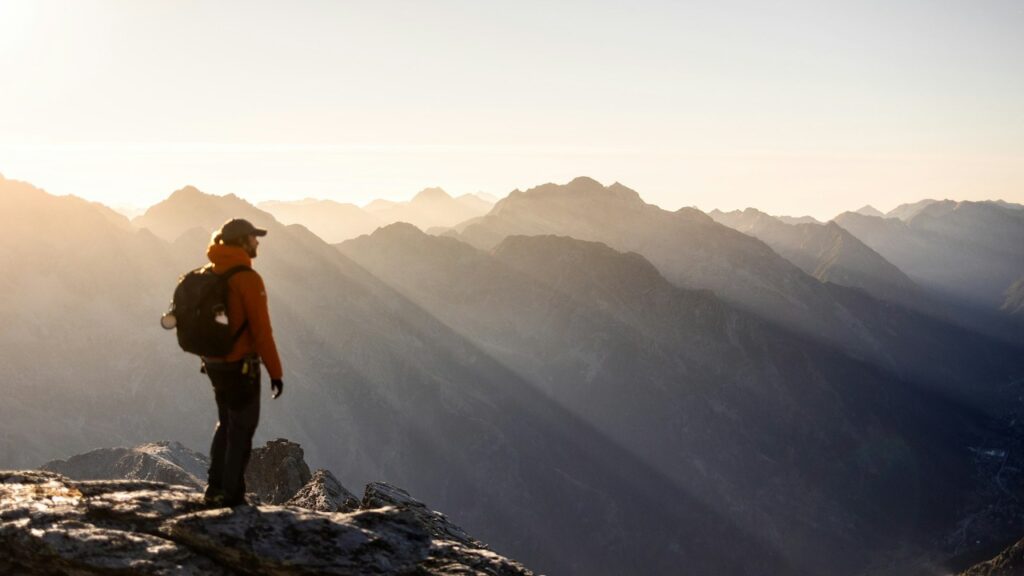
“It is not the mountain we conquer, but ourselves.” – Sir Edmund Hillary
Sir Edmund Hillary’s words carry the weight of someone who knew what mountains demand. They are not spoken from the comfort of theory, but from the hard school of effort, danger, discipline, and endurance. Yet the wisdom of this quote reaches far beyond mountaineering. Most of us will never stand before Everest, but all of us face summits that test our courage, patience, humility, and self-command.
The Mountain Outside and the Mountain Within
At first glance, a challenge looks external. It may be a demanding goal, a difficult conversation, a new responsibility, a season of uncertainty, or a dream that seems too large for our present strength. We name the obstacle as if it were entirely outside us. The mountain is the problem. The deadline is the problem. The opposition is the problem. The distance is the problem.
But as we move closer to any serious challenge, we discover another terrain. We meet our impatience, fear, discouragement, pride, laziness, insecurity, and desire to quit. The external mountain exposes the internal one. Hillary’s insight is that victory is never merely about standing at the top of something visible. It is about becoming the kind of person who can endure the climb without being conquered by the self.
Courage Is Often Quiet
We often imagine courage as something dramatic. In reality, much courage is quiet and repetitive. It is waking up and continuing when enthusiasm has faded. It is choosing discipline when excuses sound reasonable. It is doing the next right thing when no one is watching. It is returning to the path after a failure without turning failure into identity.
Conquering ourselves does not mean destroying our emotions or pretending we are never afraid. Fear can be a useful signal. Fatigue can be honest. Doubt can remind us to prepare wisely. The problem is not that these inner experiences appear. The problem is allowing them to rule. Inner conquest begins when we acknowledge what we feel, but refuse to let fear, comfort, or discouragement make the final decision.
The Discipline of the Next Step
Every great climb is made of steps. This is true physically, but it is even more true spiritually and emotionally. Large goals can intimidate us because we try to carry the entire weight of the future at once. We look at the summit and feel small. We imagine every possible difficulty before we have taken the next faithful step.
A wiser approach is to respect the summit without being paralyzed by it. What matters now is the next step that is actually ours to take. Read one page. Make one call. Practice one hour. Apologize once. Save a little. Begin the draft. Walk today. Tell the truth. Rest without surrendering. A life changes not only through heroic moments, but through repeated acts of alignment between what we value and what we do.
Humility on the Way Up
Mountains also teach humility. No climber succeeds by arrogance alone. The mountain is larger than the climber. Weather changes. Energy fails. Preparation matters. Companions matter. Limits matter. This humility is not weakness; it is realism. The person who wants to conquer himself must learn to respect reality, accept instruction, correct course, and keep growing.
Sometimes the most important victory is not pushing harder, but becoming wiser. We conquer ourselves when we stop confusing stubbornness with strength. We conquer ourselves when we can ask for help without shame, pause without quitting, and learn without feeling humiliated. Inner mastery is not rigid control. It is ordered freedom: the ability to choose what is good even when another impulse is louder.
A Question for Reflection
Hillary’s quote invites a simple but powerful question: What part of myself must I overcome in order to meet the challenge before me? The answer may not be the same for everyone. One person must overcome fear of beginning. Another must overcome the need for approval. Another must overcome comfort, resentment, distraction, perfectionism, or the habit of postponing life.
When we identify the real inner obstacle, the path becomes clearer. The challenge may still be difficult, but it is no longer mysterious. We can train the part of ourselves that needs strengthening. We can practice courage, patience, focus, humility, and perseverance. We can become more capable than we were yesterday.
Closing Reflection
The summit matters, but it is not the deepest victory. The deeper victory is the transformation that happens on the way. Each challenge becomes a mirror, showing us what still needs discipline and what strength is already growing within us. Sir Edmund Hillary reminds us that the greatest climb is not always upward. Often, it is inward. And when we learn to conquer ourselves with patience, courage, and humility, every mountain before us becomes a place where character can rise.

Continue your daily reflection
Discover The Daily Wisdom Journal
A single quote can change the direction of a day. The Daily Wisdom Journal brings together 365 celebrated thoughts for reflection, growth, and daily inspiration.